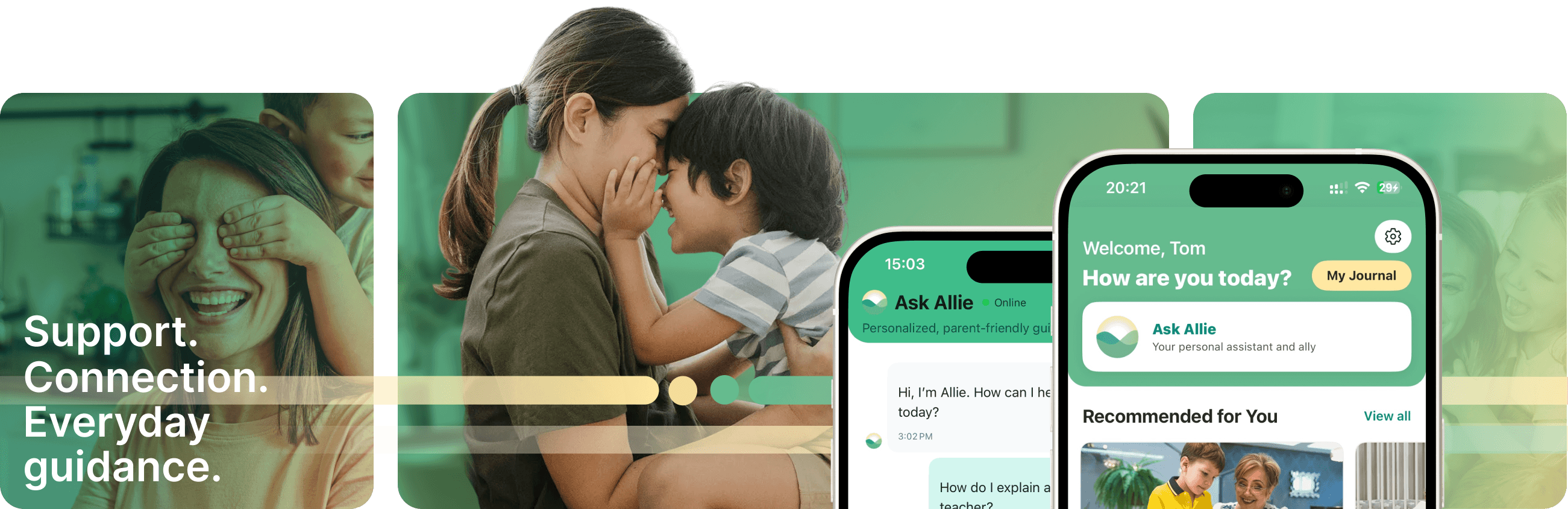
ABOUT THE PROJECT
Neurodevelopmental care is slow, fragmented, and emotionally demanding. Families often wait years for answers, while clinicians lack continuous, real-world insight into a child’s development. NeuroAI set out to design an:
Empathetic, AI-assisted platform that supports families early, bridges gaps in care, and empowers more informed clinical collaboration.
My Role
UX / UI Designer
Owned UX research, UI design
Timeline
3 Months
THE PROBLEM
Too Much Waiting. Not Enough Guidance.
Parents often notice that something might be wrong with their child early on, but it can take a long time to actually get help. During that waiting period, parents feel stressed and confused, and they often run into bad or conflicting information online. At the same time, doctors and clinicians don’t see what the child is like day to day, so they’re missing important context.
Current State: Fragmented Care Pathways

Public healthcare pathway
Long wait times, delayed diagnosis
No regular provider for many families

Private clinic pathway
Limited access by location
High out-of-pocket costs

“Go it Alone” pathway
Reliance on internet, forums, friends
Advice often unverified or harmful
PRIMARY USER
Meet Maya
The Concerned Parent
Maya is the parent of a young child. She’s not searching for a diagnosis; she’s searching for clarity. She notices small differences early and carries those questions quietly, unsure who to trust or when to act.

Current Struggle
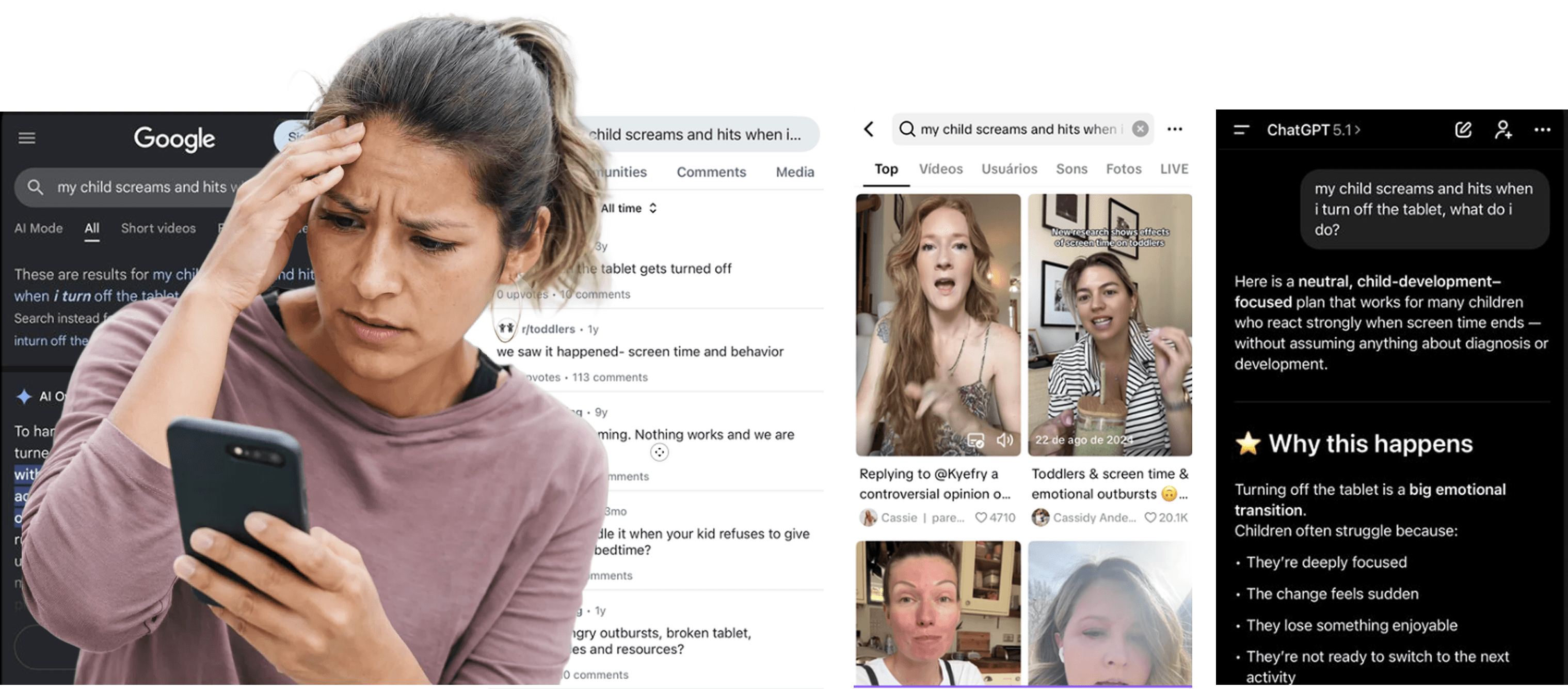
“I can tell something’s different, but I don’t know if I should be worried or if I’m just overthinking it. Everyone tells me to wait, but waiting feels like doing nothing. I keep Googling, and every answer says something different.”
Parents wants validation, not panic
Waiting without guidance increases anxiety
Unstructured searching replaces trusted support
SECONDARY USER
Meet Dr. Alex Chen
The Time-Constrained Clinician
Dr. Chen sees many families each week, often meeting them at isolated points in time. They value accuracy, efficiency, and tools that respect clinical judgment.

Current Struggle
“I only see the child for a short window, and I’m trying to reconstruct months of history from memory. Parents know their child best, but that information doesn’t always come in a usable way.”
Clinicians value caregiver insights but need structure
Time pressure amplifies cognitive load
High-signal summaries matter more than raw detail
Core Challenge
Research Strategy & Approach
Rather than validating solutions too early, I focused on understanding lived experience. The strategy was intentionally qualitative and exploratory:
Capture emotional, behavioral, and systemic friction
Understand how people actually behave outside clinical settings
Identify where design could reduce anxiety without overstepping medical boundaries
This meant prioritizing stories over statistics early on.
Research Methods
Clinicians value caregiver insights but need structure
Time pressure amplifies cognitive load
High-signal summaries matter more than raw detail
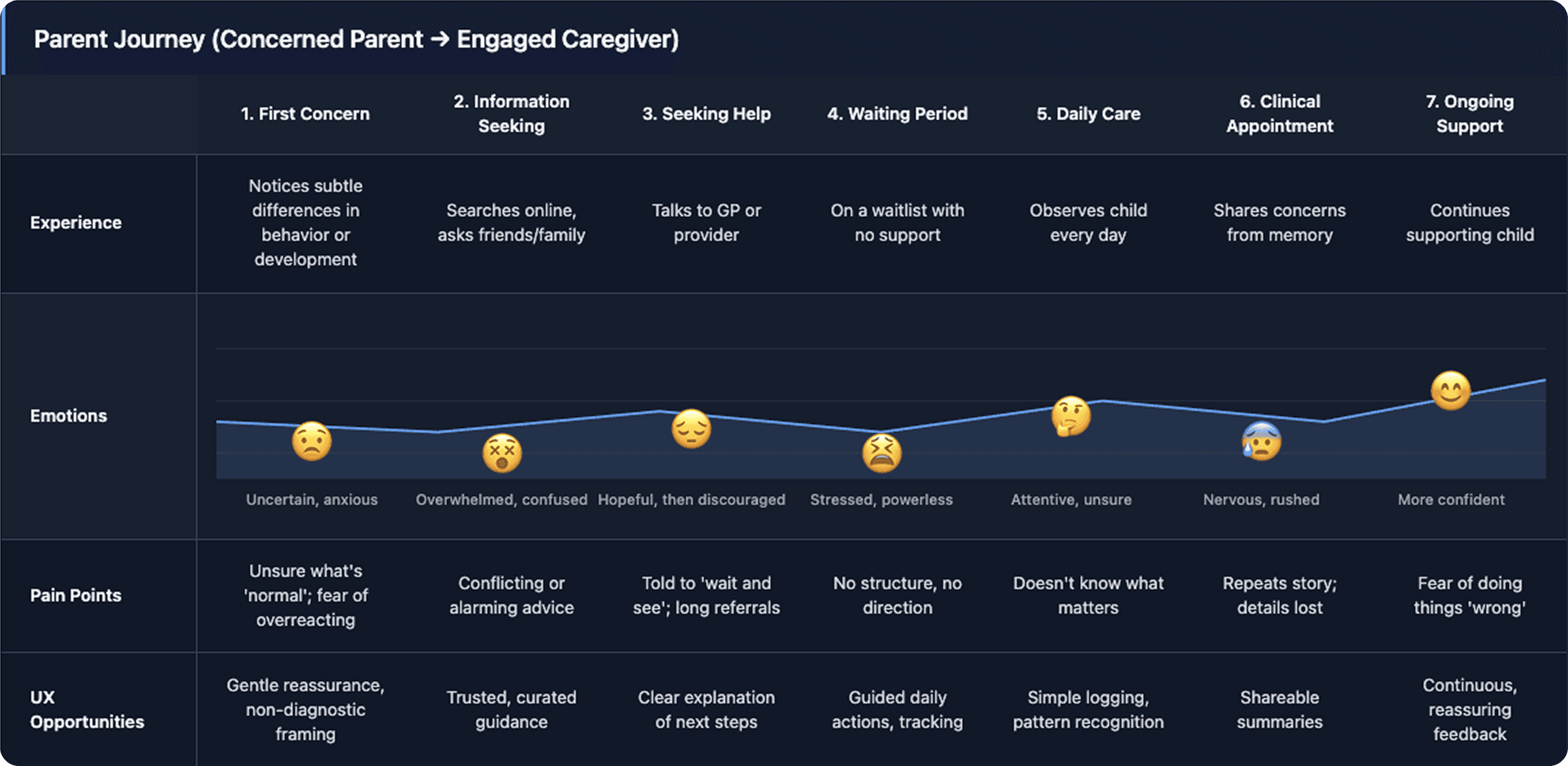
Journey Map — Parents & Clinicians
Research Outcome
The research fundamentally shifted how we framed the problem and, in turn, the role the product needed to play.
We realized families didn’t need faster answers, they needed support while they were waiting. Clinicians didn’t need more data, they needed clearer signals they could trust. And the system didn’t need another standalone tool, it needed shared context over time.

Waiting isn’t passive.
For parents, waiting is stressful work. Without guidance, anxiety grows and families turn to unreliable information. What caused stress wasn’t the length of the wait but it was the lack of structure.
Parents want reassurance.
Most parents weren’t looking for answers or labels. They wanted to feel heard, get gentle guidance, and take small steps without feeling alarmed or dismissed.
Important context exists but gets lost.
Parents know their child best and notice patterns over time. Clinicians value this insight, but today it’s shared in fragmented, memory-based ways that are hard to use.
Clinicians look for signal under time pressure.
With limited appointment time, clinicians need clear patterns and summaries—not raw or excessive data. Tools that added noise or ambiguity quickly lost trust.
Trust must be designed intentionally.
Parents know their child best and notice patterns over time. Clinicians value this insight, but today it’s shared in fragmented, memory-based ways that are hard to use.
How Research Shaped the Outcome
The research changed how we thought about success. As a result, the product shifted:
We moved from diagnosis-first → to supporting families earlier and more safely
From collecting everything → to focusing on what actually matters
From disconnected moments → to connecting daily life with clinical care
And from top-down decisions → to real collaboration between parents and clinicians
What Changed
A shift from fragmented, unsupported waiting to guided, continuous support—replacing anecdotal information with structured insights, reducing caregiver anxiety through clarity and confidence, and giving clinicians shared context to prepare more effectively.
Before
Long, unsupported wait periods
Fragmented, anecdotal information
Caregiver anxiety and uncertainty
Clinician knowledge gaps
After
Guided engagement during waiting
Structured, high-signal insights
Confidence and clarity
Shared context and preparation
The Solution
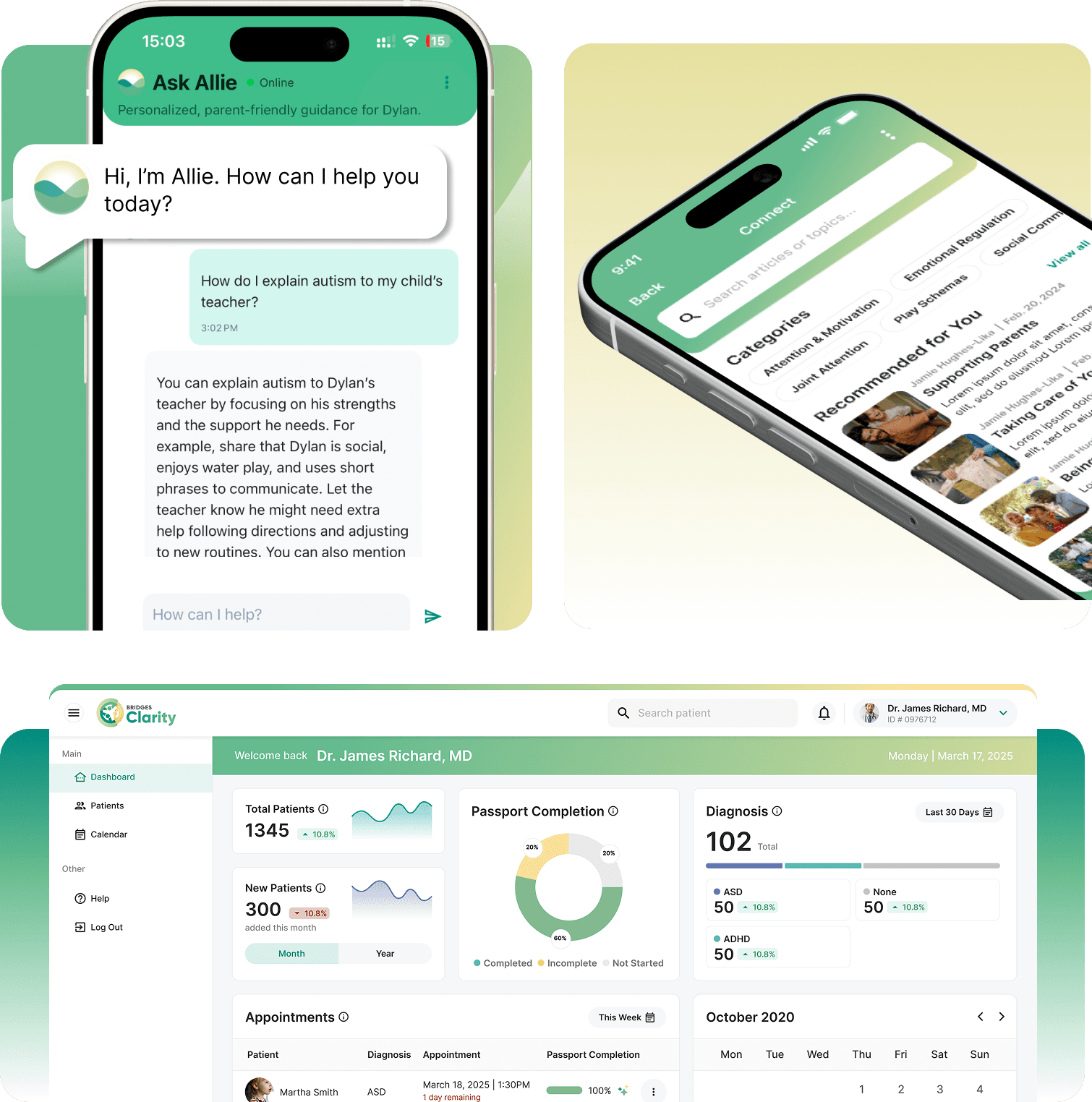
BRIDGES Engage was designed to bridge the gaps between fragmented care pathways by providing families with early, continuous, and clinically responsible support—regardless of where they are in the system.

Proposed Solution: BRIDGES Engage Pathway

For Maya (Primary)
Acknowledge early concerns without alarm
Turn waiting into guided, supportive engagement
Capture simple, everyday observations
Build confidence through clear patterns
Arrive at care prepared, not overwhelmed

For Dr. Alex Chen (Secondary)
Receive high-signal context before visits
Spend less time reconstructing history
Trust caregiver input without added noise
Focus appointments on insight and planning
Maintain continuity between visits
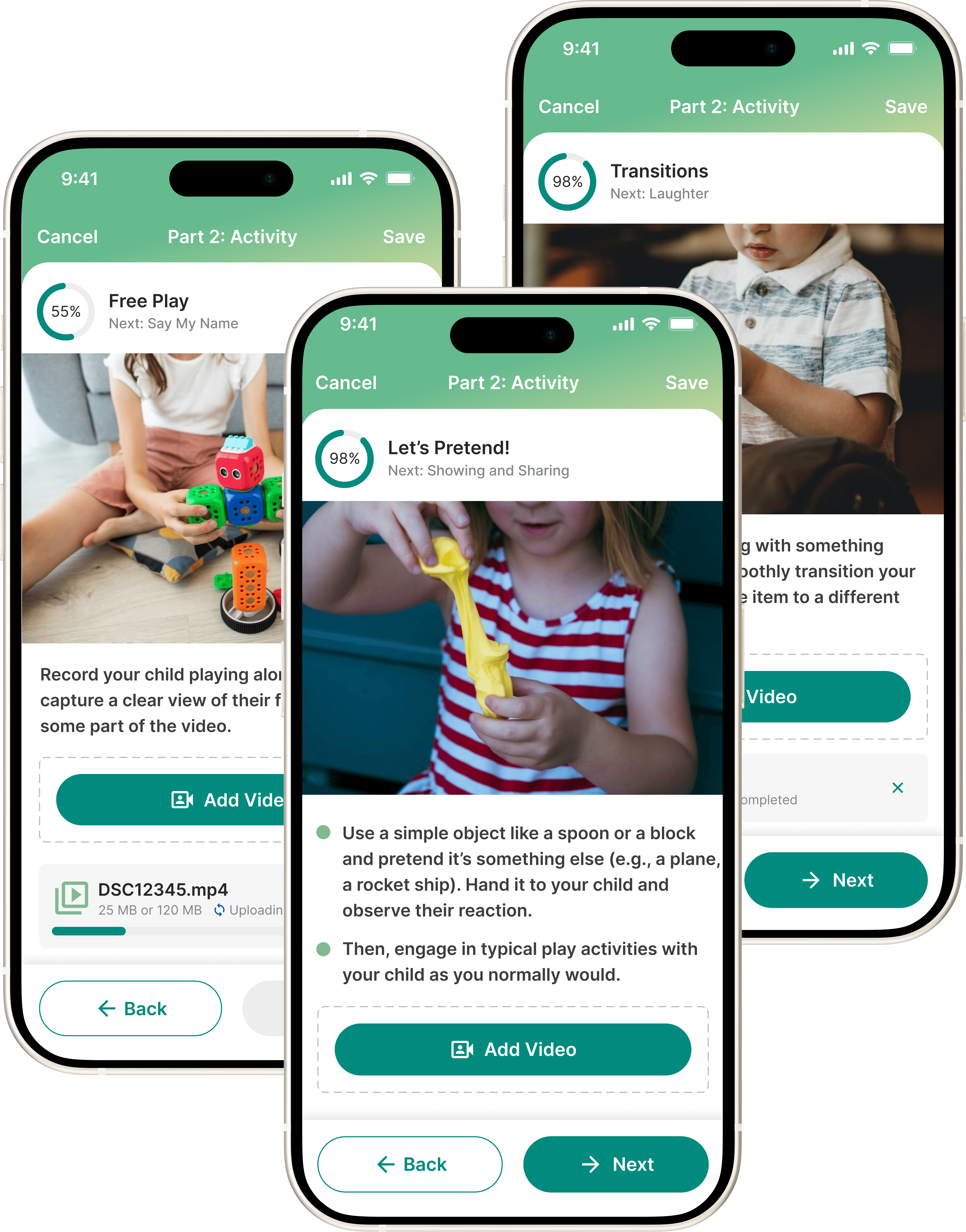
Small Steps, Meaningful Progress
Problem: Caregivers feel overwhelmed and unsure how to help day-to-day.
Solution: The app breaks support into manageable routines and daily actions, helping families build consistency without burnout.
User Impact: Reduced anxiety and increased sense of control for caregivers.

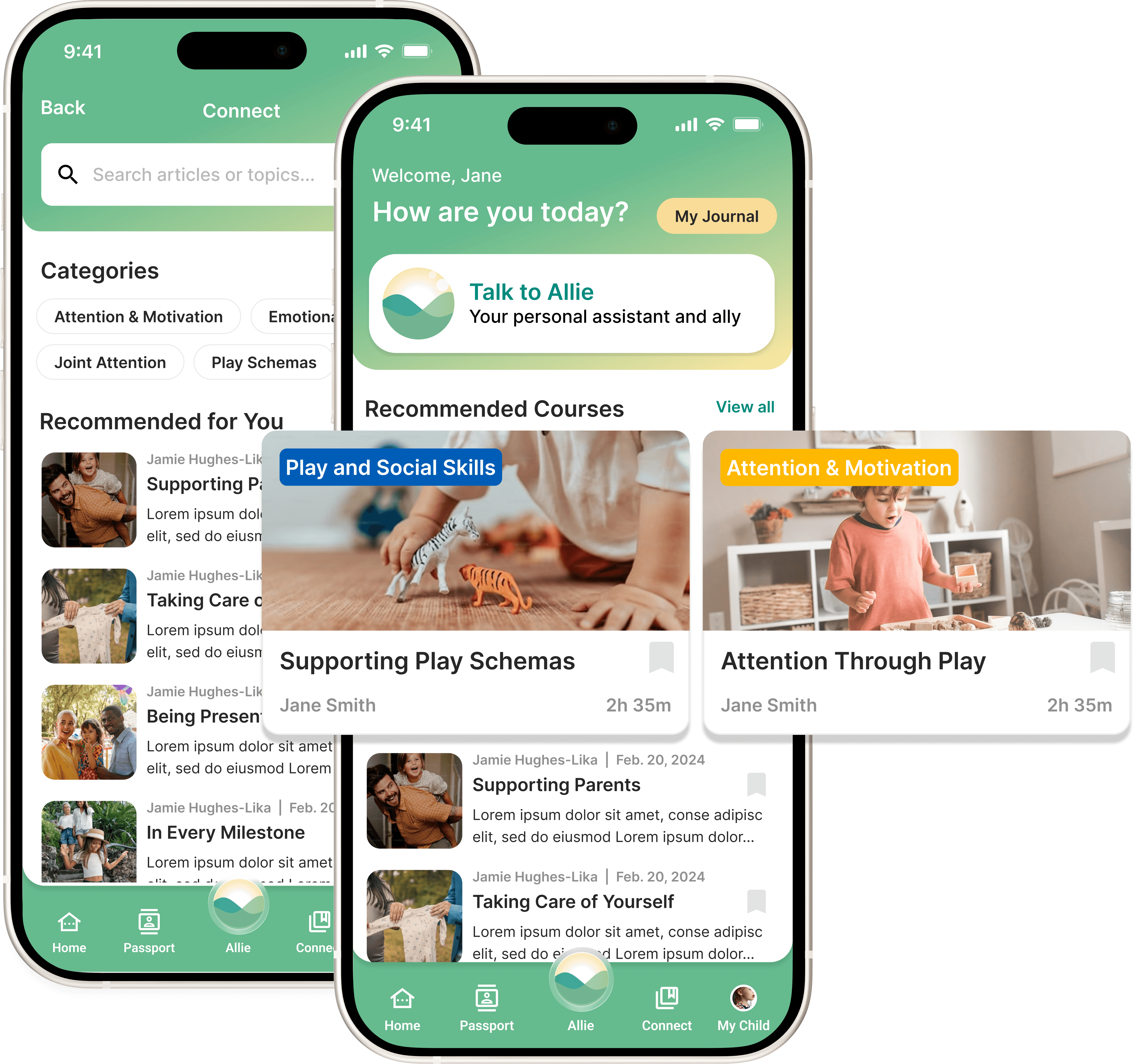
AI-Powered Personalized Guidance (Allie)
Problem: Generic advice online is often irrelevant or alarming.
Solution: AI delivers contextual, parent-friendly guidance based on each child’s needs—clearly framed as support, not diagnosis.
User Impact: Faster clarity and confidence in daily decisions.
Evidence-Based Resource Library (900+ Resources)
Problem: Families struggle to identify trustworthy information.
Solution: Expert-curated articles and activities are surfaced at the right time, aligned to the child’s priorities.
User Impact: Higher trust and reduced reliance on unreliable sources.
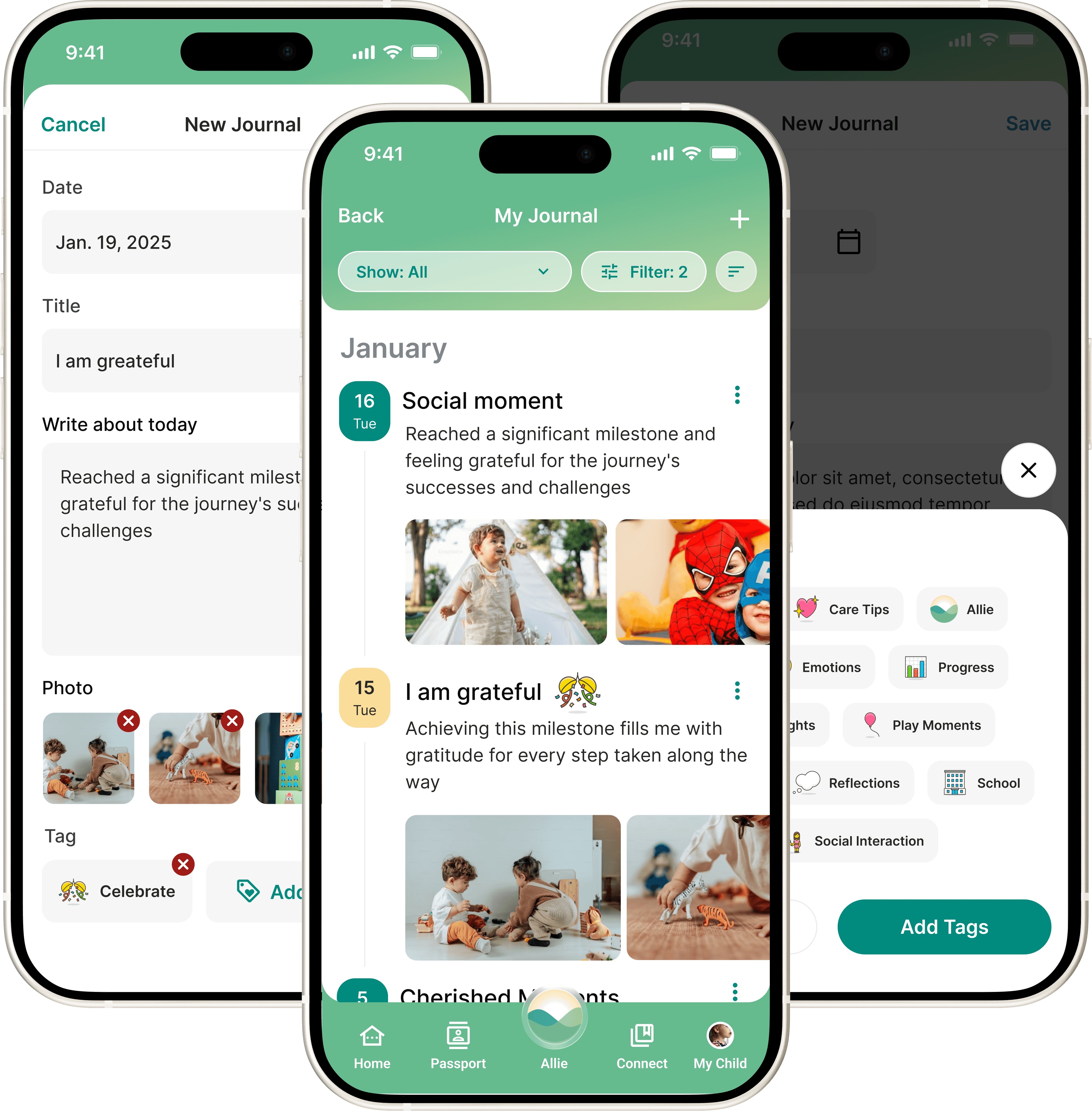
Progress Tracking & Journaling
Problem: Observations are often forgotten, scattered, or anecdotal.
Solution: Families log behaviors, milestones, photos, and documents in one place.
User Impact: Clear progress visibility and better preparation for clinical conversations.
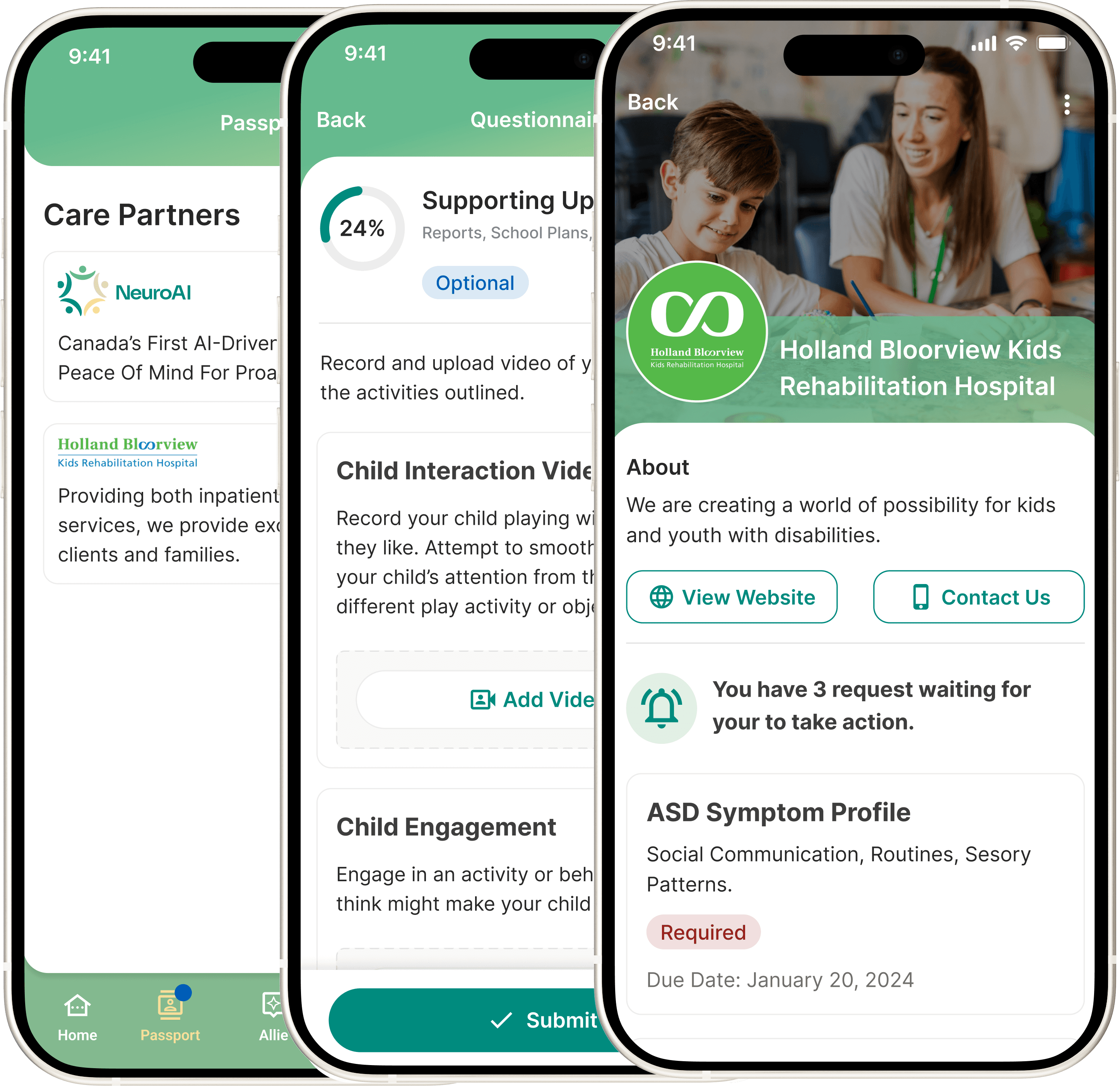
Guided Care Requests Portal
Problem: Clinicians struggle to gather meaningful context between visits, while parents aren’t sure what to observe, do, or share. Communication is fragmented, unstructured, and easy to miss.
Solution: A shared portal where clinicians send clear, structured requests, questions or simple activities. Parents respond with notes, photos, or videos, guided step by step.
User Impact: Reduces follow-ups and miscommunication, and creates stronger continuity between visits.
Clinician Readiness Dashboard
Problem: Clinicians walk into appointments without clear context. Critical caregiver input is scattered, incomplete, or arrives too late—forcing clinicians to reconstruct history under time pressure.
Solution: The dashboard acts as a readiness layer for care, giving clinicians an immediate view of who is prepared, what’s complete, and where attention is needed—before the visit begins.
User Impact: The dashboard helps clinicians quickly see which patients are ready for meaningful conversations, reducing time spent gathering background during appointments. By surfacing preparation as a clear, actionable signal, it enables more focused, higher-quality discussions while lowering cognitive load throughout a busy day.

Design Decisions:
Readiness over raw data
Scan-first layout
Time-aware context
Patient Snapshot (At-a-Glance Overview)
Problem: Clinicians enter appointments with limited time and fragmented background information.
Solution: A single-screen snapshot showing key timelines, recent observations, and notable patterns before the visit.
User Impact: Faster orientation, Reduced need to reconstruct history, More focused conversations.

Design Decisions:
Prioritize summaries over raw entries
Use visual hierarchy to surface signal first
Limit content to what can be read in under 30 seconds
Clarity Assistant (Allie for Clinicians)
Problem: Patient context is scattered across notes, history, and caregiver entries. Clinicians lose appointment time searching and re-reading instead of focusing on care.
Solution: Allie sits beside the worklist as a patient-aware assistant. Clinicians ask in plain language, or tap a suggested question, to get a child's history, current concerns, or a full chart summary in seconds.
User Impact: Less time reconstructing context, more time spent on the child and family.
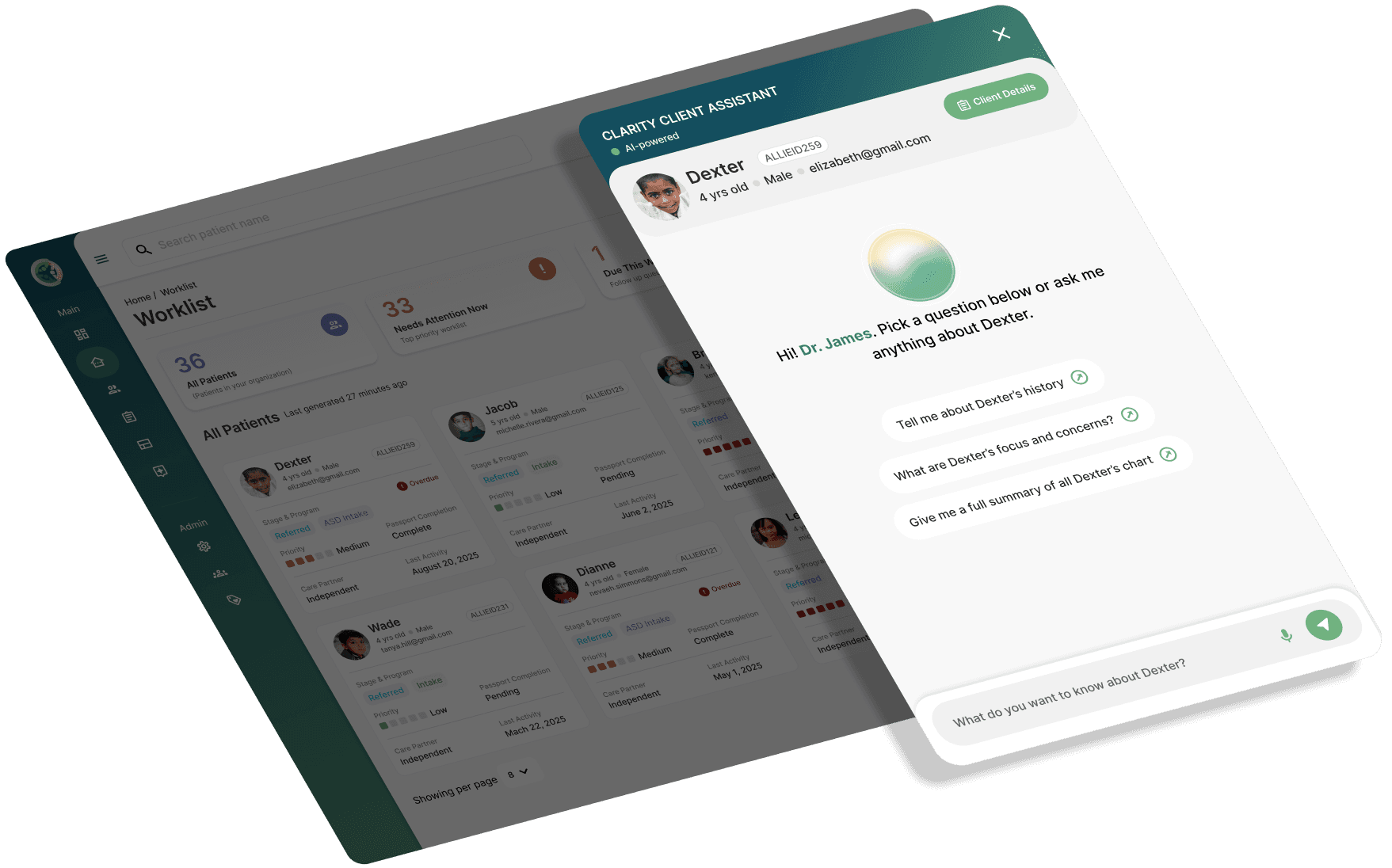
Design Decisions:
Suggested questions over a blank prompt
Scoped to one patient at a time
Side panel keeps the worklist in view
AI-Assisted Program Builder
Problem: Setting up a clinical program means building stages and intake forms from scratch. It is slow, repetitive admin work that delays getting families started.
Solution: Clinicians start from a ready-made template or describe their clinic in plain language, and the AI Form Builder drafts the intake forms. Every question stays editable before it publishes to the Engage app.
User Impact: Programs go live faster, caregivers get clear, structured forms from day one, and clinicians keep the final say on what AI generates.
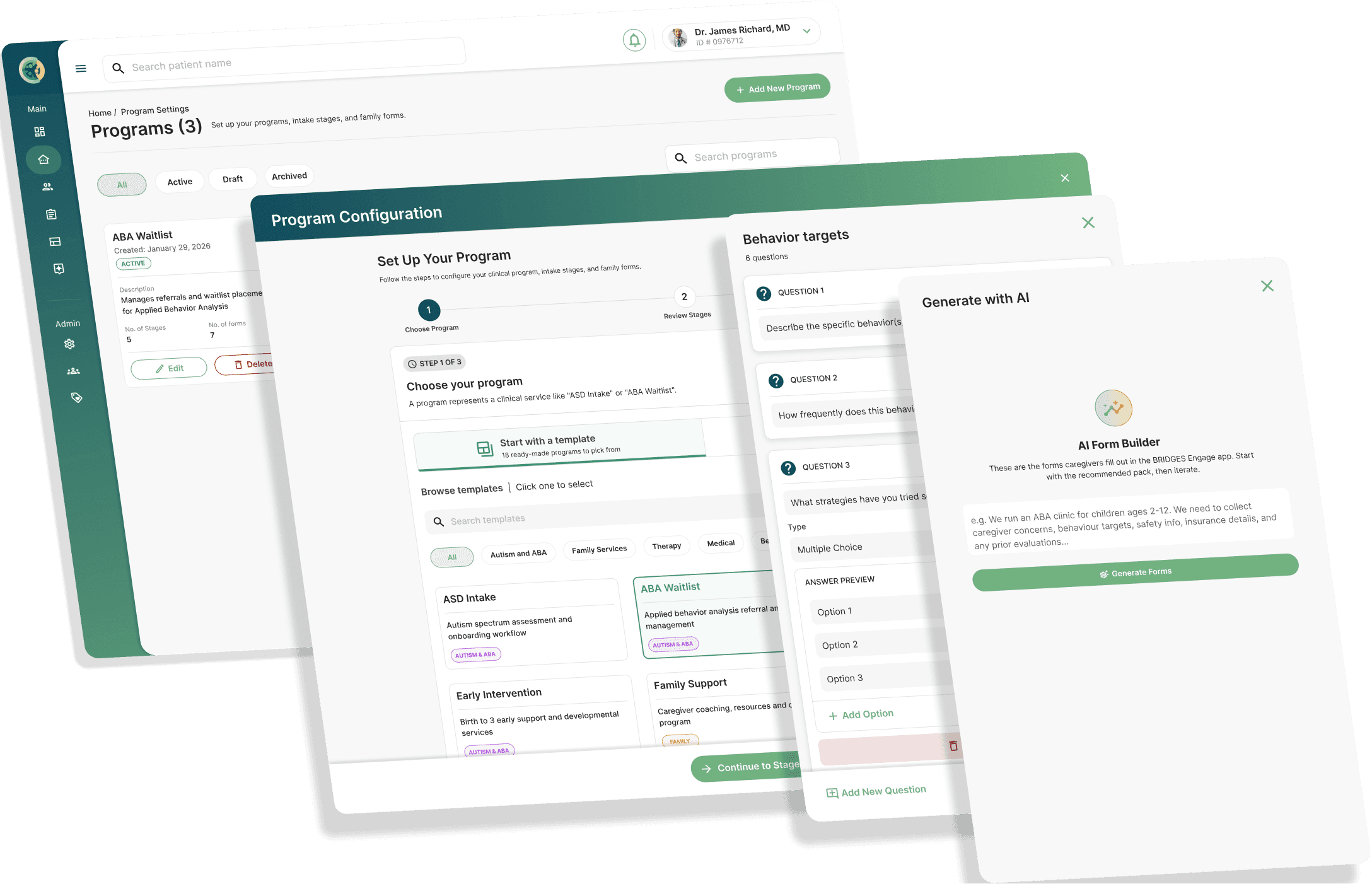
Design Decisions:
Templates first, blank canvas second
AI drafts, clinician approves
Guided setup by default, Advanced when needed
Design Impact
BRIDGES Engage demonstrates how AI can be designed not as an answer engine, but as a support system, one that respects uncertainty, prioritizes emotional safety, and strengthens human relationships in healthcare.
For me, this project reinforced a core design belief:
In high-stakes domains like healthcare, good UX isn’t about speed—it’s about trust, pacing, and dignity.
Post-launch iteration
Making Allie the front door
Families finished onboarding and then stalled. The fix was to put the conversation first, not a dashboard.

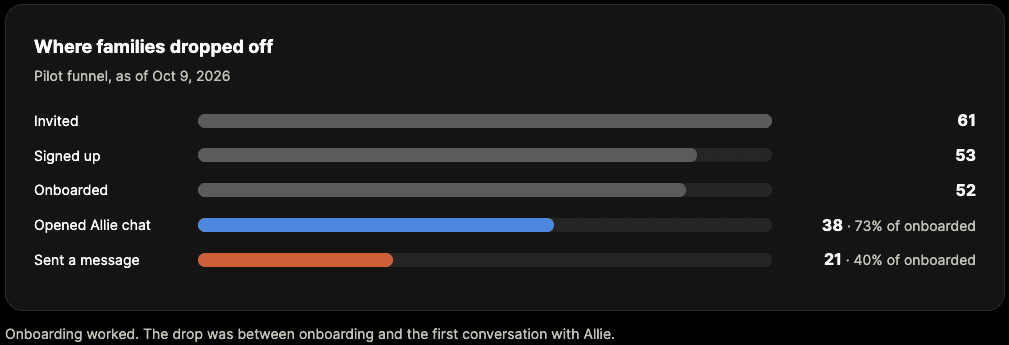
completed onboarding (52 of 53 signups)
expert-curated resources
Problem
Families finished onboarding and landed on a busy dashboard. Only 40% of onboarded families ever messaged Allie, and usage had stalled for months.
Solution
After consent, parents land inside a conversation with Allie. She introduces herself, confirms their intake is saved, and offers starter prompts that mix emotional and practical questions. Skipping lands on the dashboard with a single gentle nudge toward Allie.
User impact (Early Signal)
After release, 5 more families opened the chat and 3 sent their first message, following 74 days with no change (pilot, n=52).
Design decisions
Start with the conversation, not a feature tour
Starter prompts over a blank chat
Point, don't pitch
Measure first message, not minutes
BEFORE

AFTER

Design impact
First contact builds in beats, so the first thing a parent sees is Allie speaking to them rather than a page appearing.
01
Typing indicator. Allie is present before she says anything.
02
Intro line holds. One sentence lands on its own, confirming the intake is saved.
03
Starter prompts assemble. Emotional and practical options appear, so there is never a blank chat.

What I learned
Measure the first message, not minutes. Minutes can look healthy while most families never start a conversation.
Pilot clinic, anonymized. Small sample (n=50 to 52), so treat the lift as an early signal. Next step: cohort analysis as more families onboard.
Next Case Study

© 2025 JP Artacho. All rights reserved.